Media
The 10th HKU Quarterly Forum on Chinese Economy:
Breaking the Deadlock and Resilience: New Drivers for
China’s Economic and Trade Growth Amid Global Changes
24 Apr 2026
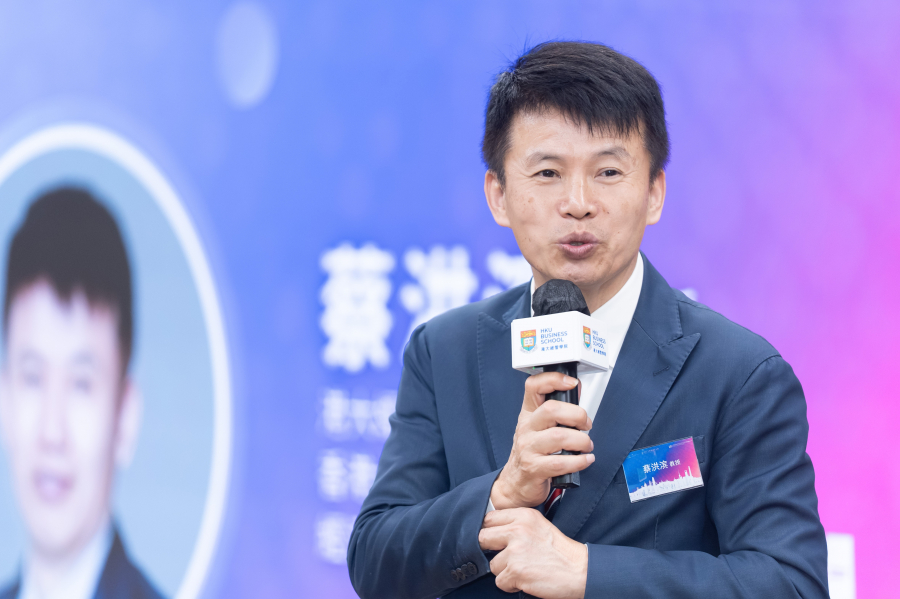
Professor Hongbin CAI, Dean and Chair of Economics, Director of the Institute of China Economy (ICE) of HKU Business School, delivers the welcoming remarks.
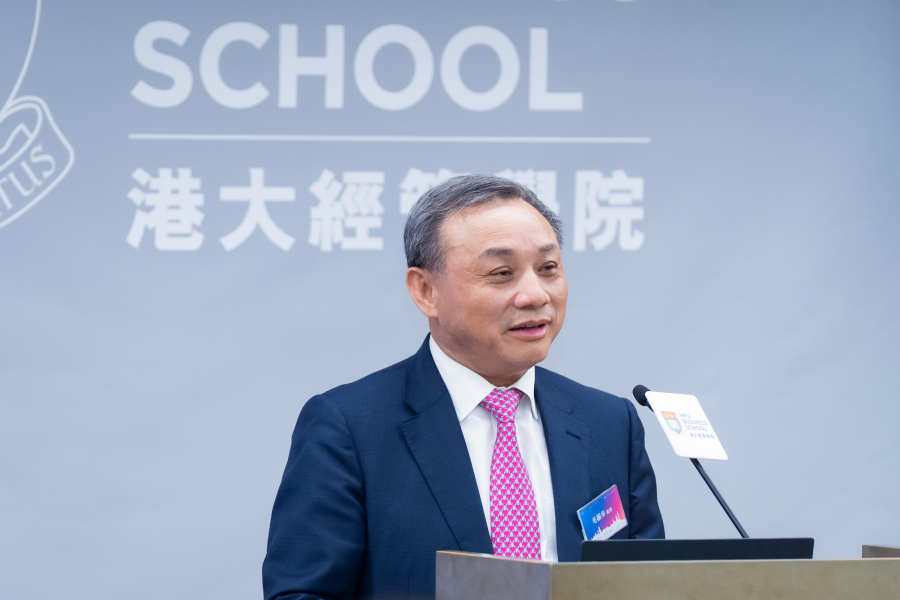
Professor Zhenhua MAO, Professor of Practice in Economics of HKU Business School and Member of Chief Executive’s Policy Unit Expert Group, presents the keynote report.
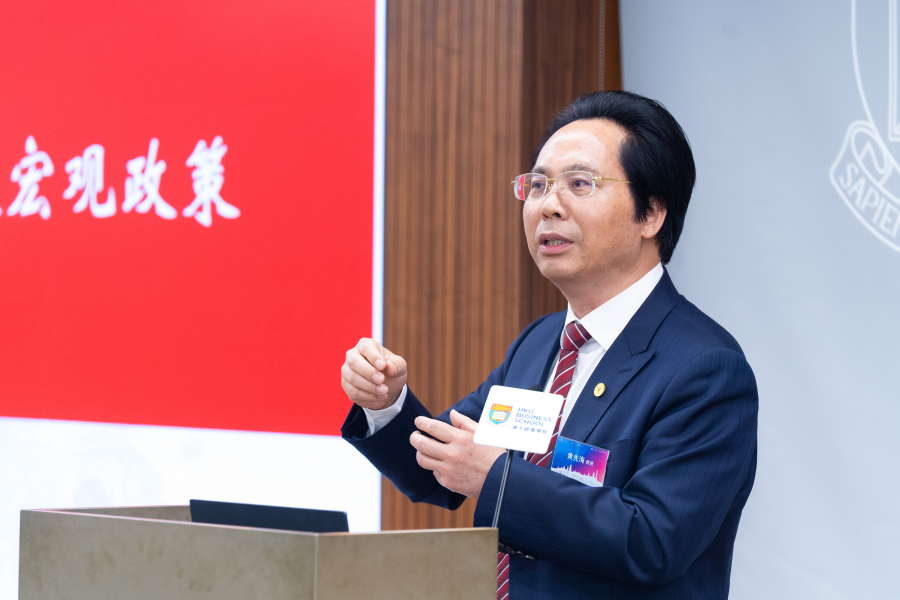
Professor Xianhai HUANG, Dean, School of Global Development, Zhejiang University and Distinguished Professor, Changjiang Scholars Programme, delivers a keynote speech.
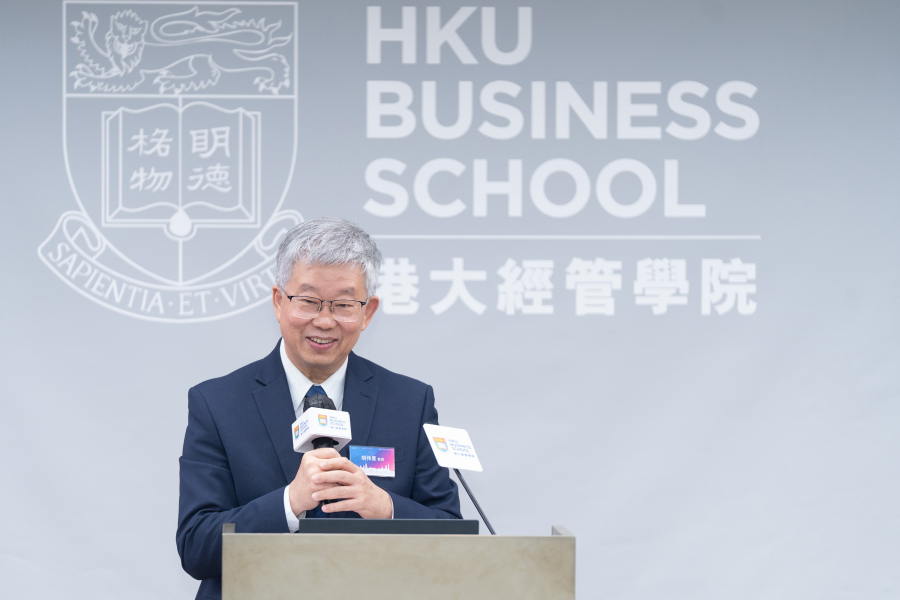
Professor Richard Weixing HU, UMDF Distinguished Professor of Politics and Public Policy and Dean, Faculty of Social Sciences, University of Macau, delivers a keynote speech.
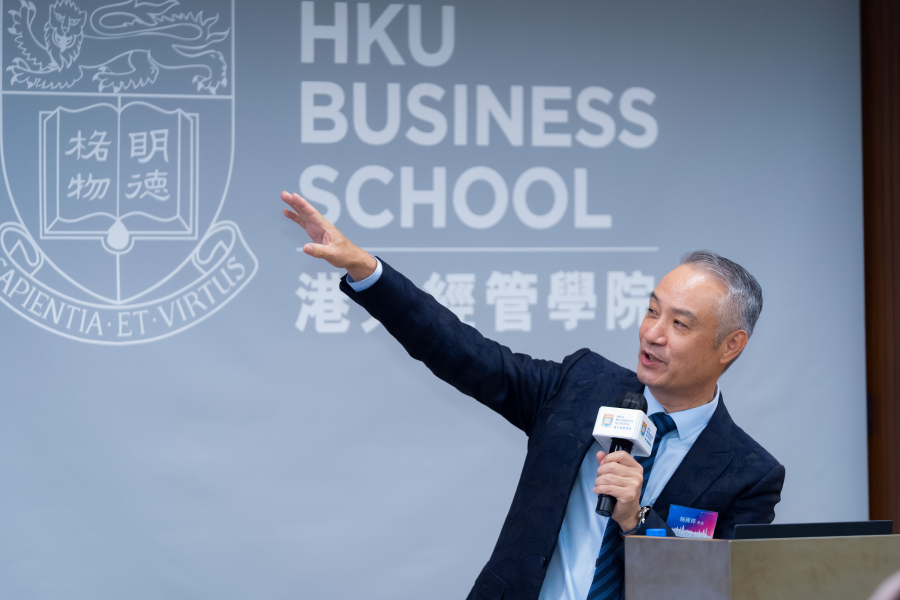
Mr. Xianxiang YANG, Executive Director and Chairman of the Board, SITC International Holdings Company Ltd.
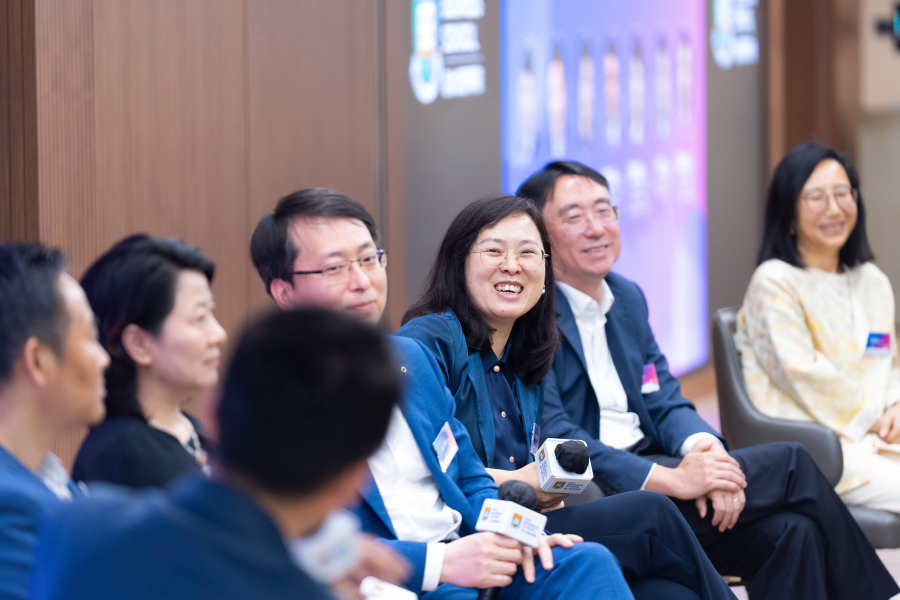
(From left) Professor Hongbin CAI, Dean and Chair of Economics, Director of ICE of HKU Business; Dr. Jun CHEN, Chairman and CEO, Shenzhen Haiyuan Venture Investment Co., Ltd; Dr. Yifan HU, Managing Director, Global Wealth Management, Regional Chief Investment Officer and Head Macroeconomics APAC, UBS; Dr. Wenli ZHAO, Managing Director and Chief Economist, CCB International (Holdings) Limited; Dr. Haixia YUAN, Managing Director and Dean of Research Institute, China Chengxin International Credit Rating Co., Ltd. and Specialist, Fiscal Risk Research Expert Division, Ministry of Finance; Mr. Jie XIN, Director, The New Silk Road International Centre for People-to-People Economic and Trade Exchanges and Former CEO of Lianlian DigiTech Co., Ltd.; and Ms. Xiaojia ZHI, Managing Director, Chief China Economist, Head of Research Asia ex. Japan, Crédit Agricole CIB engage in a roundtable discussion.
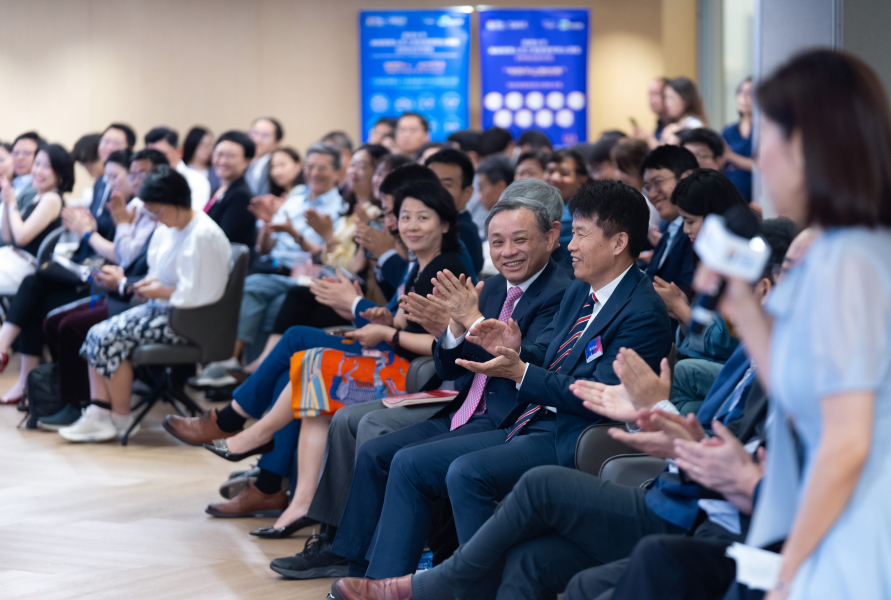
Held at HKU iCube at Central, the Forum brought together a diverse audience of academic experts, industry leaders, alumni and students.
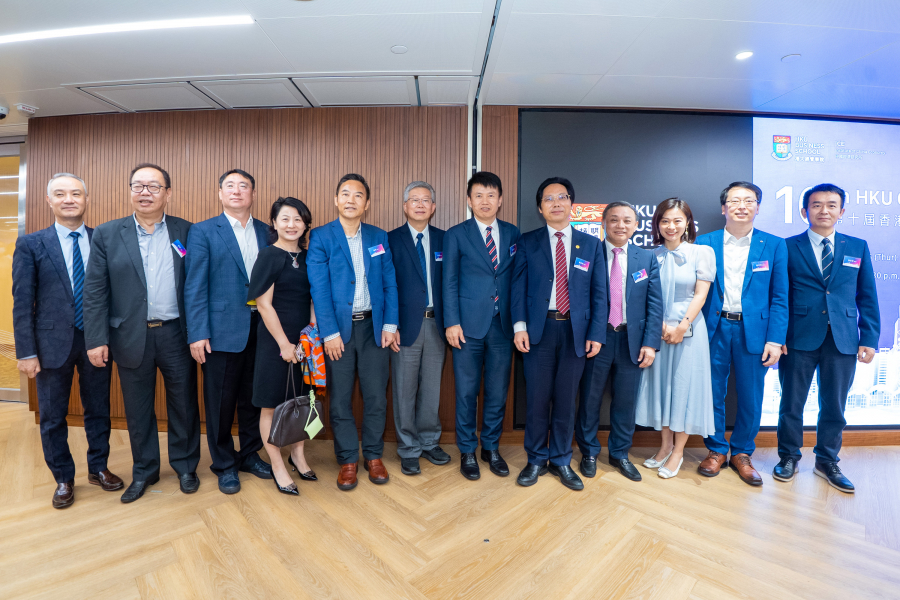
Held at HKU iCube at Central, the Forum brought together a diverse audience of academic experts, industry leaders, alumni and students.
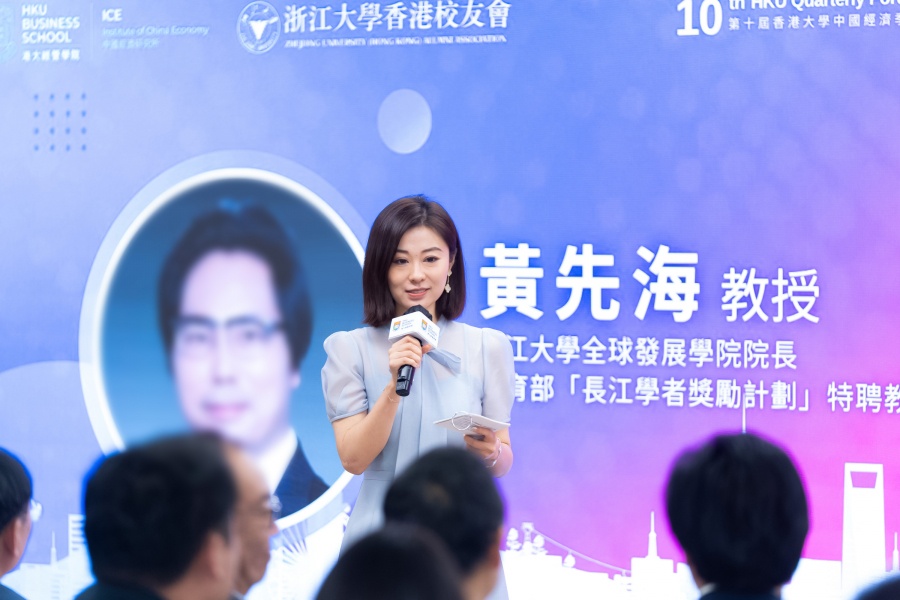
Held at HKU iCube at Central, the Forum brought together a diverse audience of academic experts, industry leaders, alumni and students.
The 10th HKU Quarterly Forum on Chinese Economy, hosted by HKU Business School’s Institute of China Economy (ICE), in partnership with the Zhejiang University Alumni Association (Hong Kong), was held on Thursday, 23 April 2026, at HKU iCube in Central, Hong Kong.
This edition of the Forum addressed the profound impact of intensifying geopolitical tensions—particularly in the US–Israel–Iran relationship—on the global economic order and the unprecedented external and internal challenges facing the economies of the Chinese Mainland and Hong Kong. Renowned experts and scholars discussed key topics, including geopolitical risks, the impact on international shipping, macroeconomic policy directions, and the transition to new economic drivers.
The Forum received more than 280 registrations, including industry leaders, academic experts, alumni, and students, and attracted over 7,500 online participants.
Professor Hongbin CAI, Dean and Chair of Economics, Director of ICE of HKU Business School, said, “This marks the tenth edition of our HKU Quarterly Forum on Chinese Economy. The HKU Business School has long been deeply engaged in Chinese economic research, continuously monitoring changes in the global geopolitical landscape. Amid the economic transformation pressures facing the Chinese Mainland and Hong Kong, we are hosting this timely forum to bring together scholars and industry experts to share forward-looking insights.”
He added that, “We hope that through in-depth exchanges that serve as a catalyst for further discussion, we can build a tight-knit network of academic and business collaborations, helping industry and the public gain a more comprehensive and profound understanding of China’s economic development trends.”
He then said, “This is also the vision of the HKU Business School: leveraging our network of centres in the Chinese Mainland—including Beijing, Shanghai, and Shenzhen—and partnering with alumni associations from various top universities to provide a solid foundation for the institute, utilising academic knowledge and research resources to conduct deeper and more objective analyses of the Chinese economy.”
Professor Zhenhua MAO, Professor of Practice in Economics of HKU Business School and Member of the Chief Executive’s Policy Unit Expert Group in HKSAR, presented the keynote report titled, “The Reshaping of the Global Political and Economic Landscape by the US–Israel–Iran War: Impacts on the Economies of Chinese Mainland and Hong Kong”. He pointed out that, at the current stage, the Middle East conflict has had a relatively limited overall impact on China’s economy.
Domestic industrial production has remained robust, while investment and output in artificial intelligence and high-tech industries have sustained rapid growth, supporting the steady development of new growth drivers. At the same time, infrastructure investment has helped reverse the decline in overall investment, and, together with the early implementation of central government policies, has provided strong support for stable economic growth.
From an export perspective, geopolitical tensions in the Middle East exert a dual effect on China’s exports. On the one hand, instability in the geopolitical environment has weakened external demand, while rising shipping costs and adjustments in global supply chains have posed challenges to exports. On the other hand, China’s comprehensive industrial system and stable production capacity have significantly enhanced export resilience, enabling it to efficiently absorb overseas orders shifting towards China. More importantly, the conflict has further strengthened global momentum towards de-dollarisation in settlement practices. He said, “The renminbi has become an increasingly important option for global investors seeking diversified asset allocation. In March this year, the share of renminbi settlements in Middle Eastern oil trade surpassed that of the euro for the first time, making it the world’s second-largest settlement currency, second only to the US dollar, which accounts for 52 per cent.”
Amid the conflict, Hong Kong’s capital markets have demonstrated notable resilience and risk resistance. “Against the backdrop of instability in the Middle East,” he explained, “there are clear signs of increased capital inflows into Hong Kong markets. Enquiries from Middle Eastern clients regarding investments in Hong Kong equities, as well as the establishment or expansion of family offices, have risen sharply on a quarter-on-quarter basis. Hong Kong is further reinforcing its position as a ‘safe haven’, while continuing to play its vital role as a ‘super-connector’.”
Professor Xianhai HUANG, Dean of the School of Global Development, Zhejiang University, and Distinguished Professor in the Changjiang Scholars Programme, delivered a keynote on the topic, “Enhance the Transformation Between Traditional and Emerging Growth Drivers, and Establish a Third Pillar of Macroeconomic Policy.”
He stated that, “In the face of profound changes unseen in a century, China’s economy must accelerate the transition between old and new growth drivers and establish a third pillar of macroeconomic policy.”
At present, three major trends have emerged in this transition. First, the automotive industry has overtaken real estate to become the leading pillar of the economy. Second, the “new trio” industries—namely new energy vehicles, lithium batteries and photovoltaic products—alongside the emerging “new new trio”, including innovative pharmaceuticals, robotics and drone technologies, are rapidly gaining prominence. Third, China is shifting from a cost-based competitive advantage to one driven by innovation, with capital- and technology-intensive electromechanical products replacing traditional goods to become the largest category of exports.
In addition, to support advances in technological and industrial innovation, it is proposed that—beyond fiscal and monetary policy—a third macroeconomic policy pillar be established: an overarching innovation policy framework aligned with innovation-led growth. Policy instruments under this framework would include government-backed innovation funds, a well-developed equity investment and venture capital ecosystem, technology-focused finance, tiered intellectual property protection, incentive mechanisms linking scientists and entrepreneurs, inclusive R&D subsidy and compensation schemes, and the development and sharing of major scientific infrastructure.”
Professor Richard Weixing HU, UMDF Distinguished Professor and Dean of the Faculty of Social Sciences, University of Macau, delivered a keynote on the topic, “Reflections on the 2026 APEC China Year: What Kind of FTAAP Should China Expect?” He noted that global free trade is currently undergoing a shift towards deglobalisation. He said, “The United States now advocates a trade logic based on reciprocal exchange, whereas the free trade zones we promote are grounded in established international free trade rules to maintain an orderly system. Looking ahead, it will be necessary to integrate these two logics, advancing the development of free trade through institutional optimisation and model innovation.”
He further observed that, “Sino–US relations have evolved into a form of regional strategic competition, with the broader configuration of major regional powers being reshaped accordingly. The Trump administration, along with many Western countries, has widely adopted policies characterised by withdrawal from multilateral frameworks, protectionism, and deglobalisation, which together constitute the principal challenges in the current external environment.”
Mr. Xianxiang YANG, Executive Director and Chairman of the Board, SITC International Holdings Company Ltd., delivered a keynote on the topic, “Impacts of the US–Israel–Iran War on Global Maritime Transport”. He highlighted, among other factors, that the conflict has significantly disrupted maritime operations, with cargo vessels stranded in the Persian Gulf and vessel supply tightening, while rising oil prices have increased operating costs and intensified financial pressure on shipping companies.
A roundtable discussion was moderated by Professor Hongbin CAI, Dean and Chair of Economics and Director of the Institute of China Economy (ICE), HKU Business School. Panellists included Dr. Jun CHEN, Chairman and CEO, Shenzhen Haiyuan Venture Investment Co., Ltd.; Dr. Yifan HU, Managing Director, Global Wealth Management, Regional Chief Investment Officer and Head of Macroeconomics, Wealth Management, UBS; Mr. Jie XIN, Director, The New Silk Road International Centre for People‑to‑People Economic and Trade Exchanges and Former CEO of Lianlian DigiTech Co., Ltd.; Dr. Haixia YUAN, Managing Director and Dean of Research Institute, China Chengxin International Credit Rating Co., Ltd., and specialist of the Fiscal Risk Research Expert Division, Ministry of Finance; Dr. Wenli ZHAO, Managing Director and Chief Economist, CCB International (Holdings) Limited; and Ms. Xiaojia ZHI, Managing Director, Chief China Economist and Head of Research Asia ex. Japan, Crédit Agricole CIB.
When asked about China’s economic outlook in the context of the Middle East conflict, the panellists generally agreed that the economy remains well-positioned to withstand related challenges. They also shared pragmatic and balanced views on a range of issues, including the renminbi exchange rate, trade tensions and export performance, sectoral growth dynamics, and consumption and inflation trends. In addition, they noted that signals such as inbound tourism and even the “football economy” could offer useful indicators of broader economic conditions.
Hi-res photos are available here.
For media enquiries, please contact:
|
HKU Business School |
|
|
Ariane LI Assistant Director Communications and Public Relations Tel: +852 6010 4388 / 3917 0506 Email: ariane@hku.hk |
Ruoyao Zhang Executive Assistant Communications and Public Relations Tel: +852 6502 3317 / 3917 1552 Email: ruoyao77@hku.hk |
About HKU Business School
Established in 2001, HKU Business School is one of the youngest and most dynamic members of The University of Hong Kong (HKU). The School strives to nurture first-class business leaders and foster academic and relevant research that serves the needs of Hong Kong, China and the rest of the world in the new Asia-led economy. As a top international business school, the School has established its place as a globally impactful institution that leads the way through timely thought leadership, pioneering research, and educational excellence. Deeply rooted in Hong Kong and fully engaged with China, the School’s world-class faculty equip students with global knowledge and perspectives.
HKU Business School offers business education across a full range of disciplines, while achieving remarkable growth in faculty strength and research capabilities. The School ranks Asia’s No.1 in Financial Times’ Aggregated Research Ranking for two consecutive years, 2024 and 2025, while the University of Hong Kong ranked 11th in the world and No. 1 in Asia according to the QS World University Rankings 2026. The School has strategic partnerships with world-renowned universities and corporate partners, providing market-oriented content, superior learning, and instrumental resources.
To better serve our students and alumni in various cities and regions, and to facilitate collaboration opportunities with business communities around the globe, HKU Business School has established a unique international network that extends to Beijing, Shanghai, Shenzhen and Ho Chi Minh City.
HKU Business School is fully accredited by the European Quality Improvement Systems (EQUIS) and the Association to Advance Collegiate Schools of Business (AACSB).
Visit us at https://www.hkubs.hku.hk/
 Facebook
  HKU IOS App
  HKU Android App
  Social Media and Apps