A research team from the LKS Faculty of Medicine at the University of Hong Kong (HKUMed) has developed a machine-learning classifier capable of analysing the genomes of influenza A viruses (IAVs) to accurately predict their potential risk of transmission among mammals. The team has successfully identified the key clues that may explain cross-species transmission of influenza A viruses from birds to mammals, and even to humans. The study found that when guanine (G) or cytosine (C) associated in the IVA genome decreased, the virus demonstrated a higher risk for sustained transmission in mammals, including humans. The research team recommends incorporating this genome signature into future influenza pandemic risk assessment frameworks to facilitate the early identification of high-risk viral strains. This groundbreaking study was published in Nature Microbiology [link to the publication].
Influenza viruses come in various types, such as IAVs, which are commonly found in birds (also known as avian influenza) and can infect other animals, including mammals and humans. Once an avian influenza virus successfully adapts to the mammalian host environment and, more critically, gains the ability for human-to-human transmission, it could trigger an influenza pandemic, posing a severe threat to public health.
Using genomic signature to distinguish high-risk viruses
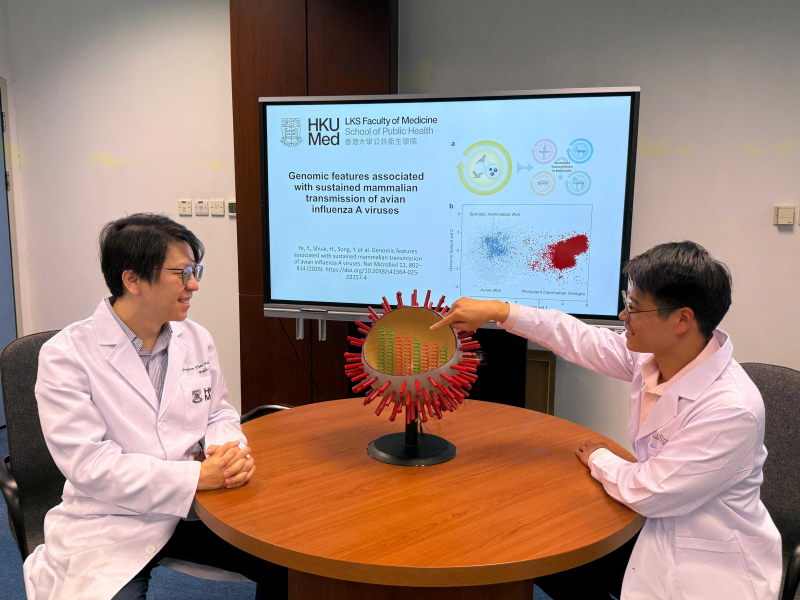
Led by Professor Tommy Lam Tsan-yuk, Associate Professor from the School of Public Health, HKUMed, the research team analysed large-scale IAV genetic datasets to compare features across different viral lineages. Based on these genomic features, the researchers classified IAVs into two major groups: one group transmits primarily among birds and only occasionally infects mammals; while the other is capable of sustained transmission among mammalian hosts. The study further revealed that, among the viral lineages that can persistently spread among mammals, the earliest viruses exhibit reduced GC-related content. This indicates that the genomic characteristic may play an important role in the cross-species adaptation process, facilitating the ability of IAVs to sustain transmission in mammals.
Recently, H5 viral strains have attracted widespread attention, particularly the highly pathogenic clade 2.3.4.4b, which has also demonstrated reduced GC-related content in cases involving infections in minks, foxes and humans. The research team believes that this lineage has a higher potential risk of evolving into a human influenza virus. Therefore, it recommends that GC-related content be added to pandemic risk assessment tools, with more stringent surveillance and preventive measures.
AI-enabled influenza surveillance strengthens public health preparedness
Building on their findings , the research team has developed a machine-learning classifier that accurately predicts the potential risk of sustained mammalian transmission based on the influenza virus genomic content (https://iav-transmission.org/).
Professor Tommy Lam noted that since 2021, there has been a marked increase in sporadic infections in human and other mammals with highly pathogenic avian influenza H5 viruses from birds. Many of these cases were linked to viruses from the clade 2.3.4.4b, and more recently infections in dairy cattle have been reported. He stated, ‘Among the many IAVs that circulate primarily in birds, it remains unclear which viruses are capable of adapting to, and sustaining transmission in mammals. This represents a major public health issue.’
Professor Lam emphasised that introducing more refined risk assessment methods, including the incorporation of GC-related genomic content, would help strengthen surveillance efforts and facilitate earlier detection of high-risk viruses, enabling timely action at the early stage of human infection.
About the research team
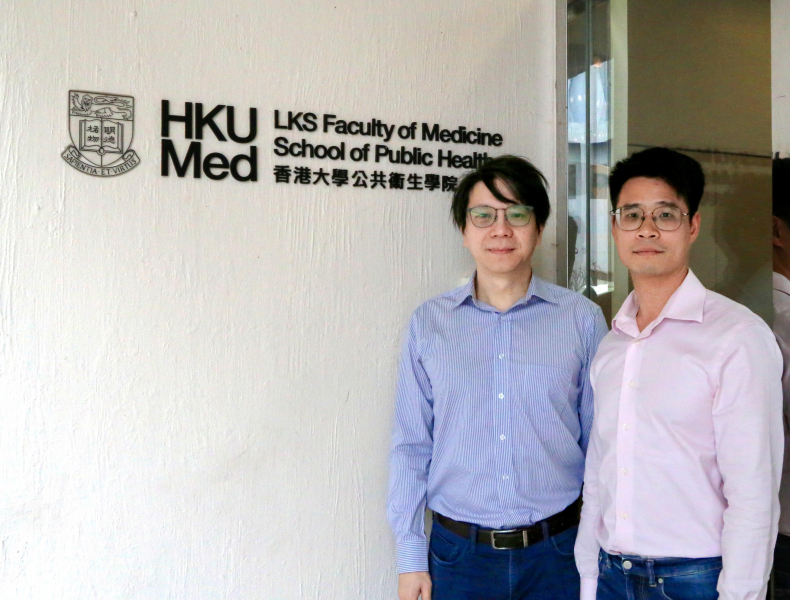
This study is led by Professor Tommy Lam Tsan-yuk, Associate Professor, School of Public Health, HKUMed, and the State Key Laboratory of Emerging Infectious Diseases at the University of Hong Kong. Professor Lam is also a team member of The Hong Kong Jockey Club Global Health Institute (HKJCGHI). The first author is Dr Ye Yongtao from Professor Lam’s team.
Media enquiries
Please contact LKS Faculty of Medicine of The University of Hong Kong by email (medmedia@hku.hk).

 Facebook
  HKU IOS App
  HKU Android App
  Social Media and Apps